Bees & Wasps Control
What is the difference between honeybees and native bees?
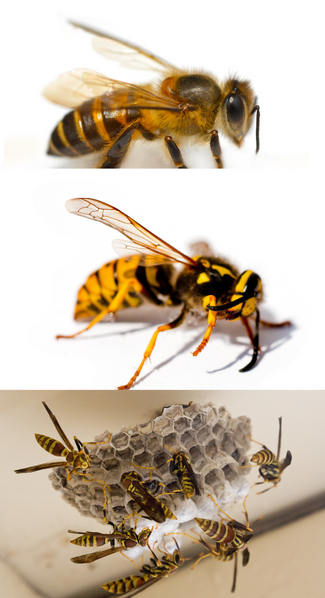
The Honeybee (Apis mellifera) is the most prevalent species in the world and, owing to its honey producing capabilities, is one of the beekeepers’ preferred species for both honey production and pollination.
They range in size 12mm-15mm variable in colour but are usually brown with a banded dull yellow and brown abdomen.
Honeybees are normally better pollinators, although tiny native bees may access smaller blooms are also crucial pollinators. Honeybees reside in a nest or hive dominated by a single queen. The queen, who is bigger than the workers or the male drones, is in charge of egg production and pheromone-based hive management. Worker bees make up the majority of the hive and construct, maintain, and gather nectar and pollen for the bee larvae to eat.
When stung by a honeybee, the barbed sting (complete with connected venom gland) sticks in the skin and rips free of the insect. The bee dies from this wound, but the venom gland keeps spitting poison into the sting, therefore it must be removed as quickly as possible. Avoid pressing on it since doing so will push more venom into the wound. The easiest way to get the sting out is to scrape it off with your fingernail.
There are around 1,700 Native Bee species in Australia, only 11 of these species have no sting!
These are the native honeybees (Tetragonula – formerly Trigona – and Austroplebeia). All of Australia’s native bees have the ability to sting, they range in size from 2mm to 26mm in size and can be fluffy, sparkly, single-coloured, or vividly coloured due to their development over hundreds of years in Australia. The native bee doesn’t store nectar and therefore generally doesn’t create honey.
Bee control:
We endeavour to protect Tasmania’s Bee populations where we can. We will employ a local beekeeper to safely relocate hives, however in circumstances where Bee hives are inaccessible, such as roof voids and walls, we will treat the hive or in urgent situations where people have a severe allergy that could lead to potentially life threating situations (Anaphylaxis).
It’s crucial to use caution while near nesting areas and wear protective clothing as necessary to avoid getting stung.
Wasps
There are many different types of wasps in Australia, including solitary wasps and social wasps like paper wasps and mud daubers. Some wasps are parasitoids, which means that they deposit their eggs on or within other insects, frequently caterpillars or spiders, so that the growing larvae of other insects may feed on them.
There are two commonly found Wasps in Tasmania, the European and the English Wasp, both capable of inflicting painful stings. As wasps can be aggressive, the services of a pest control technician are recommended as being the safest and most effective means for the control.
The workers of both species are sterile females that are 12 to 15 mm in length and have black bodies with yellow stripes. They are swift flyers with transparent wings that wrap over their body lengthwise.
Males and queens are both around 20mm in length, with the male having a long, thin abdomen and the queen a robust one.
Wasps commonly seek eaves, porch ceilings and overhangs to nest in. Unfortunately there is many reasons you may have wasps on your property, including:
- Supply of weathered wood
- Insect food supply
- Access to indoor shelter
- lots of trees on property (rural)
A wasp nest can range in size from 15 centimetres to 5 metres, and it can include up to 4 million cells and more than 100,000 workers.
Treating a wasp nest is a complex process and requires professional help to effectively destroy the whole nest. We strongly advise not to do it yourself, as wasps are very protective of their nests. Our technicians carry the correct protective gear to carry out the service.
Before HomeFix Group can treat the Wasp nest, it is important that you locate it first. Once the nest is located, we spray an insecticide powder directly into the nest, effectively killing all wasps it touches. A lot of wasp nests are found in the ground, and you will generally see the wasps flying in, out and around the hole. In some cases wasps may be just swarming, and there may not be a nest on the premises, this is why it is important to locate it first.
Wasp and bee infestations can pose a serious threat to your health and safety. They can cause painful stings, allergic reactions, and even death in severe cases. Additionally, their nests can cause structural damage to your property. Thats why its important to address the problem as soon as possible.
At Homefix Group Pest Control, we use the latest techniques and eco-friendly products to effectively and safely remove wasps and bees from your property. Our technicians have years of experience dealing with various types of wasp and bee species and will work to eliminate the problem quickly and efficiently.